
What players say
Chain Swing City Chapter 1 delivers a focused and polished swinging experience. The chain mechanics feel responsive and realistic, making each successful swing genuinely satisfying. Level design progressively introduces new obstacles without overwhelming the player. The collectible system adds replay value without feeling mandatory. The lack of a story is fine given the arcade-style focus. A solid choice for anyone who enjoys skill-based movement games.
About this game
Core Swinging Mechanics
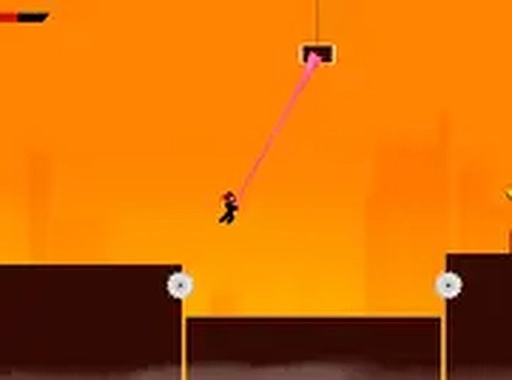
Chain Swing City Chapter 1 centers on a simple but deep grappling mechanic. Players aim and shoot a chain toward buildings. Once attached, the chain holds firm, letting the character swing in an arc. The physics engine calculates momentum realistically, so the angle of attachment and release timing directly affect speed and trajectory. A well-timed release at the peak of a swing sends the character flying forward. An early or late release can slow progress or cause a collision. This system rewards players who develop a feel for the rhythm of each swing.
Level Layout and Obstacles
Each stage presents a unique arrangement of buildings, gaps, and obstacles. Early levels feature wide, open spaces with plenty of attachment points, allowing players to focus on mastering the swing rhythm. Later stages introduce tighter corridors, moving obstacles, and surfaces that cannot hold the chain. These elements force players to plan their path in advance and adapt on the fly. The timer adds pressure but also encourages efficient route selection. Some levels include multiple possible paths, letting players choose between a safer route and a riskier shortcut.
Collectibles and Customization
Scattered throughout each stage are collectible items. Gathering these items does not affect the level completion requirement but contributes to an unlock system. Players can use collected items to unlock different visual appearances for the swinging character. These cosmetic options provide a reason to replay levels and explore alternative routes. The customization system is straightforward, with no impact on gameplay mechanics, keeping the focus on skill and timing.
Difficulty Progression
The game gradually increases difficulty by reducing time limits and adding more complex obstacle patterns. Early stages allow for generous time windows, giving new players room to learn the controls. As players advance, the margin for error shrinks. The difficulty curve feels natural, with each new challenge building on skills learned in previous levels. This structure keeps the experience engaging without becoming frustrating. Players who master the basics will find later stages test their precision and planning.
Session Design and Replay Value
Levels are designed for short play sessions, typically lasting one to three minutes each. This makes the game easy to pick up for a quick challenge. The combination of tight timers and collectible items encourages replaying stages to improve performance and gather missed items. A scoring system tracks completion time and item collection, giving players a clear goal for each attempt. The game does not include a story mode or narrative, focusing entirely on moment-to-moment gameplay and skill improvement.








Player comments
Sign in to comment
You must be logged in before posting a review or rating.
No account? Create one
No comments yet. Be the first to comment!