
What players say
Stickman Table Tennis Rally succeeds by narrowing its scope. The stickman visuals reduce clutter so players can track the ball and paddle clearly, while physics-driven shots reward timing and angle control. Adaptive AI keeps matches from feeling static, and the 11-point scoring system produces quick, tense rounds. The main limitation is that the presentation is deliberately plain, so players seeking visual depth may find it sparse. Those who value responsive mechanics and local competition will get the most from it.
About this game
Paddle Positioning and Swing Timing
Each rally in Stickman Table Tennis Rally comes down to two decisions: where to stand and when to swing. Players move their paddle left or right across the table, then time a swing to determine the ball's speed and spin. The physics engine responds to both the angle and force of every hit, so no two rallies play out the same way. Success depends on mixing fast drives with softer, angled returns to keep the opponent from settling into a rhythm.
How AI Opponents Adapt
The AI in Stickman Table Tennis Rally does not stick to one approach. Early rallies tend to feature straightforward returns, but as the score tightens, opponents begin varying shot placement and pace. That shift forces players to adjust their own strategy mid-match rather than relying on a single reliable shot. A practice mode with lower difficulty settings gives newcomers room to build confidence, while higher difficulties are aimed at experienced players who want AI that predicts common patterns and exploits weaknesses.
Match Rules and Scoring
Standard matches follow traditional table tennis scoring: the first player to reach 11 points wins, provided they hold a two-point lead. At 10-10, play continues until someone leads by two. That rule turns late points into momentum swings, even though most rallies end within a few exchanges. Quick match length makes it easy to play a few rounds during a short break or settle into a longer competitive session. Local multiplayer lets two players share the same screen, taking turns serving and returning.
Visual Style and Performance
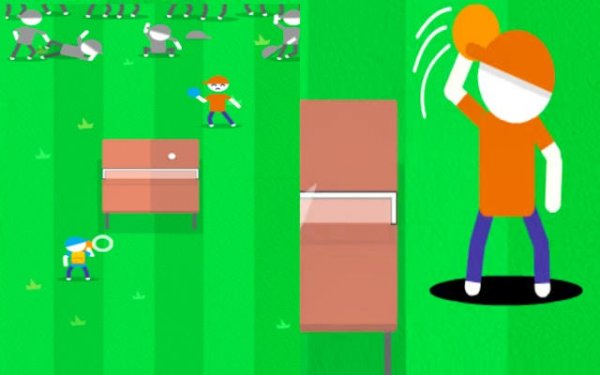
The stickman art style uses simple lines and flat colors for players and the table. This minimalist approach keeps the frame rate stable even on older devices, which matters during fast rallies. The ball leaves a faint trail on high-speed shots, giving visual feedback on spin and trajectory. Backgrounds stay unobtrusive with subtle patterns that do not pull attention away from the action.
Building a Versatile Shot Toolkit
Improvement comes from mastering swing timing. Hitting the ball at the peak of its bounce generates more power, while a late swing can add backspin. Reading the opponent's paddle angle offers clues about their intended shot direction. Against aggressive players who rush the net, defensive returns that push the ball deep into the court can create openings. For opponents who favor consistent rallies, a sudden drop shot can break their rhythm. Regular practice against different AI styles helps players develop a versatile set of shots and responses.
Compatibility
FAQ
Player comments
Sign in to comment
You must be logged in before posting a review or rating.
No comments yet. Be the first to comment!










Editorial Notes